
Date: 14th January, Wednesday, 2026
Maha Punya Kala: 3:13 PM to 5:07 PM
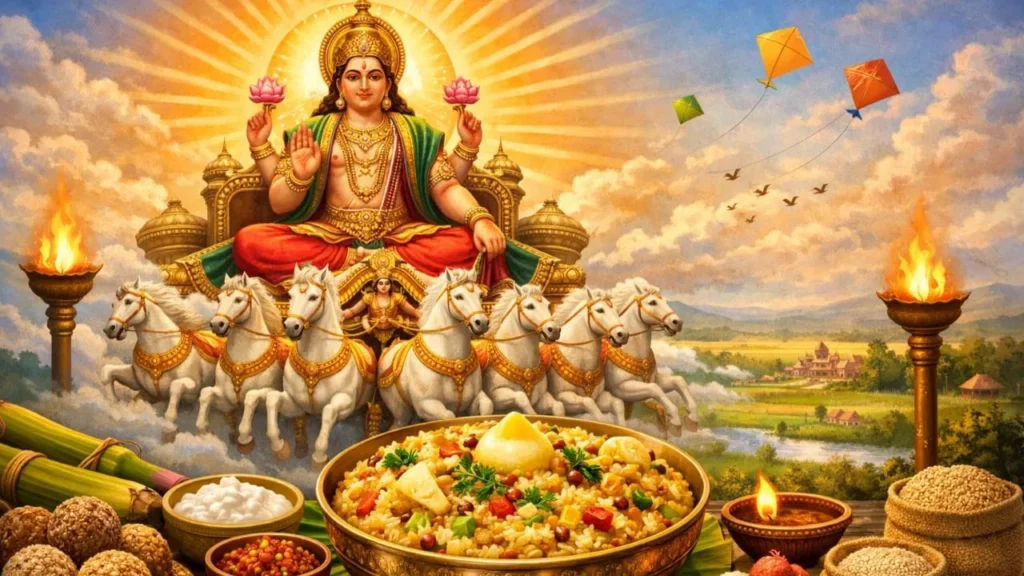
Makar Sankranti is a major Hindu festival celebrated across India and in many parts of the world. It is dedicated to Surya Bhagwan (the Sun God) and marks an important solar transition. In 2026, the festival is celebrated over four days, from January 13th to January 16th.
On January 14th, the Sun enters Capricorn (Makara Rashi) and begins its northward journey away from Cancer (Karka Rashi). This solar transition marks the beginning of Uttarayana, symbolizing new beginnings, positive energy, longer days, and the gradual increase of sunlight. Makar Sankranti holds special importance as it is one of the few Hindu festivals celebrated according to the solar calendar.
Significance of Uttarayana
The movement of the Sun from south to north is called Uttarayana, while the movement from north to south is known as Dakshinayana. Uttarayana is considered highly auspicious and represents growth, renewal, spiritual upliftment, and positive transformation. This transition also influences seasonal changes and agricultural cycles.
Four-Day Celebration of Makar Sankranti
Bhogi – January 13th
Bhogi marks the beginning of Sankranti celebrations and is observed by Hindu communities across India. It signifies letting go of the old and welcoming the new.
Key Traditions:
- Early morning bath using sesame seeds, turmeric powder, and Indian plum (Regi Pandu)
- Bonfires to ward off cold and symbolically burn old or unwanted items
- Regional celebrations such as:
- Pongal / Khichdi in South India
- Lohri in Punjab
- Magh Bihu in Assam
- Maize roti is prepared and kept for three days; on the third day, bajra roti is consumed
Makar Sankranti – January 14th
This is the main festival day, marking the Sun’s entry into Capricorn (Makara Rashi), the beginning of Uttarayana, and the celebration of Makar Sankranti.
Key Highlights:
- Symbol of new beginnings and harvest prosperity
- Kite flying as a sign of joy, freedom, and celebration
- Newly married daughters and sons-in-law are invited home
- Exchange of new clothes, sweets, and gifts
- Families adorn themselves with new clothes and ornaments
- Marks the conclusion of Ayyappa Swamy Deeksha
- Sacred sighting of Makar Jyothi
Kanuma – January 15th
Kanuma is celebrated as a farmer’s festival, focusing on agriculture and cattle worship.
Key Traditions:
- Decoration and worship of cattle and buffaloes
- Expression of gratitude to animals that support farming
- Preparation of traditional dishes like vada and dahi vada
Mukkanuma – January 16th
Mukkanuma marks the final day of the Sankranti festival.
Key Practices:
- Offerings made to Grama Devatha (village deity)
- Traditional rituals such as nose piercing for young girls
- Travel is generally avoided on this day
- Observed with devotion and community participation
Shattila Ekadashi on Makar Sankranti – January 14, 2026
In 2026, Shattila Ekadashi coincides with Makar Sankranti, making the day even more auspicious. Sesame seeds (Til) play a vital role in this observance and are used in six sacred ways:
- Bathing with sesame seeds, turmeric, and Indian plum for purification
- Applying sesame paste (Ubtan) on the body for spiritual cleansing
- Performing Havan by offering sesame seeds into the sacred fire
- Conducting Tarpan with sesame seeds and water for ancestors
- Donating sesame laddus or sesame-based foods
- Consuming sesame-based dishes like laddus or rotis
These practices are believed to remove past sins, bring prosperity, and attract divine blessings.
Spiritual and Cultural Importance
Makar Sankranti is a festival of gratitude—thanking the Sun God for a bountiful harvest and honoring nature, cattle, and farmers. Devotees take holy dips in rivers, perform spiritual rituals, and offer prayers for prosperity, good health, and well-being.
Rangoli – A Festival Essential
No Sankranti celebration is complete without Rangoli. Beautiful designs made with vibrant colors are drawn in front of homes, symbolizing happiness and welcome. Rangoli competitions are organized in villages, and prizes are awarded to participants, adding joy and festivity to the celebrations.
Makar Sankranti is a celebration where spirituality, culture, tradition, and joy come together. Every ritual, every day, and every practice holds deep meaning, making this four-day festival truly special.
